Templon Retreats From Chelsea but Not From New York
Templon’s Chelsea shutdown exposes how quickly the post-pandemic gallery land rush has soured, even for established international dealers
Templon’s Chelsea Exit Is a Market Signal, Not a Footnote
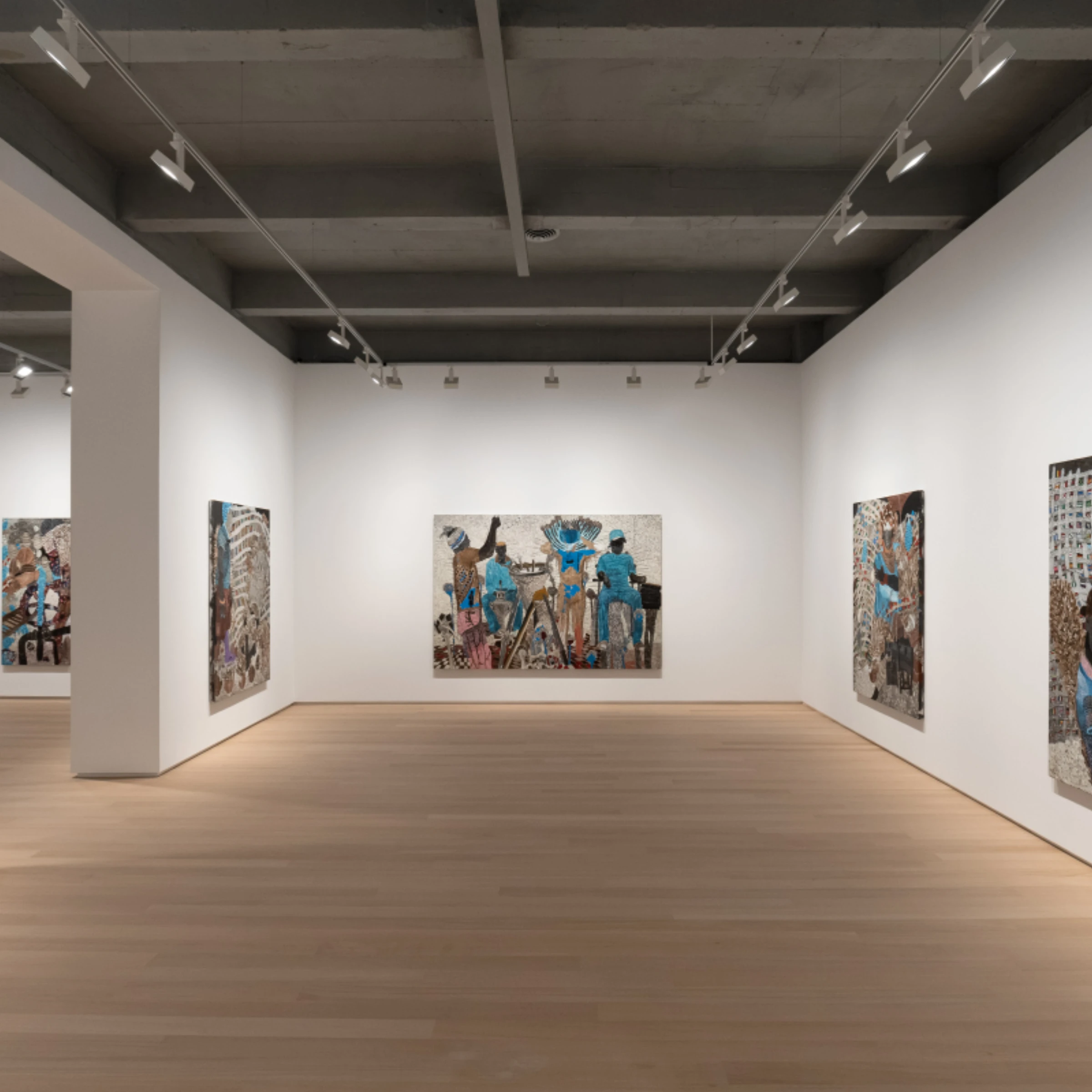
Templon has closed its Chelsea branch after only a few years, and the speed of that reversal says more about the market than another generic story about rent. Artnet reported that the Paris-founded gallery was paying $55,000 a month by the end of its run in the former Kasmin space on Tenth Avenue. That figure matters because Chelsea real estate has long functioned as a loyalty test in the gallery trade. To keep a large space there was to prove seriousness, inventory depth and long-term commitment to the New York collector ecosystem. Templon’s exit shows how little prestige that address can buy when the math stops working.
This is not a case of an unknown dealer discovering New York is expensive. Templon is one of the more established names in the European gallery system, founded in 1966 and associated with artists such as Kehinde Wiley, Jim Dine and Will Cotton. When a gallery with that profile decides a 6,500-square-foot Chelsea operation makes less sense than a smaller Tribeca or Upper East Side model, it suggests the post-pandemic expansion spree is being recalculated in real time.
The gallery’s own New York contact page still presents the space as a polished international outpost. That contrast between brand continuity and operational retreat is familiar. Dealers rarely announce contraction as defeat. They frame it as strategy, flexibility or a search for better fit. Sometimes that is true. But the broader sector context makes it hard to read this as anything other than a correction to an overheated belief that every major gallery needed a large New York footprint to remain globally legible.
Why the Gallery Sector’s Expansion Logic Has Broken Down
The old argument for big city branches was straightforward. New York concentrated collectors, advisers, curators, media attention and auction momentum. A strong Chelsea address created both practical access and symbolic leverage. In a bull market, those benefits could justify large overhead. In a slower market, they begin to look like fixed liabilities attached to a more fragmented buyer base. Online viewing rooms did not replace the city, but they did make obvious that galleries can maintain relationships, place works and manage artists without treating a giant flagship as the only credible format.
That does not mean physical galleries no longer matter. It means they now have to justify themselves more narrowly. A private showroom, an appointment-based program or a smaller district presence can do much of the same relationship work without forcing a gallery into an arms race over square footage. Templon’s reported plan to keep a SoHo showroom while searching for a smaller Manhattan site fits exactly that logic. Visibility remains necessary. Spectacle looks optional.
The closure also highlights how landlord expectations lag market reality. When dealers opened or enlarged spaces during the buying frenzy of 2021 through 2023, landlords learned to price optimism into renewals. Galleries then discovered that the same sales environment that made expansion look rational could not be relied upon to sustain it. This is why rent stories matter in the art market. They are not merely property stories. They are delayed verdicts on whether the market’s confidence was real or borrowed.
There is a wider comparative pattern too. Templon follows other international galleries that scaled back after trying to capture New York momentum. The lesson is not that New York is finished. It is that New York is expensive enough to punish symbolic overreach very quickly. The city still matters. It just no longer grants automatic legitimacy to every large-format entrant willing to pay for a corner and a staircase.
What This Means for Artists, Staff and the Geography of Influence
Closures like this are often narrated from the owner’s point of view, but artists and workers feel them differently. Staff reductions, role reshuffling and uncertainty about the exhibition calendar follow almost immediately. Artists lose a particular context for seeing their work at scale, and they lose some confidence that the gallery’s public program is expanding rather than compressing. Even when a dealer insists the city remains central, the closure changes the rhythm of how artists are shown and who encounters them.
For collectors and advisers, however, a smaller model may look perfectly rational. Many of the highest-value transactions now happen through relationships that exceed any single gallery room. In that sense, the closure is a reminder that much of the market’s real power no longer depends on public-facing exhibition space at all. It depends on networks, inventories and access. Chelsea remains the theater. The deal flow increasingly happens elsewhere.
This is why the retreat should not be mistaken for democratic correction. Lower overhead can make a gallery more agile, but it can also make the public encounter with art thinner. Appointment rooms and design-studio installations are efficient; they are not equivalent to a gallery that stages ambitious open exhibitions. If more dealers adopt this model, New York may retain market density while losing some of the walk-in visual culture that made district-based gallery scenes matter in the first place.
New York Still Matters, but the Terms Are Changing
Templon’s decision lands in a city still able to concentrate influence, but less able to convince galleries that influence requires maximal real estate. The next phase of the market will likely favor dealers who can separate genuine necessity from inherited vanity. Readers tracking similar institutional recalibrations may want to revisit our coverage of leadership and structural change at the top of the French art business, where the same issue appears in another form: how much infrastructure is actually needed to preserve authority.
There is a neighborhood story here too. Chelsea became dominant because it concentrated risk in a walkable circuit. Galleries benefited from one another’s gravity, and audiences benefited from density. As more dealers decide they can operate through hybrid models, the district’s value proposition changes. A reduced public program across multiple galleries does not look dramatic on any single afternoon, but over time it thins the ecosystem that made Chelsea worth crossing town for. Templon’s closure is therefore not just one gallery’s business choice. It contributes to a slower erosion of the district model that shaped how contemporary art was encountered in New York for decades.
That erosion does not automatically favor younger galleries. In many cases, it helps the largest dealers and the most relationship-driven businesses, because they can maintain market relevance without depending on casual foot traffic. Mid-sized galleries often suffer the most. They face the cost structure of prestige districts without the inventory depth or secondary-market muscle to absorb volatility. Templon, to its credit, is acting before the problem becomes existential. But the fact that a gallery of its stature is retreating should worry anyone who thinks the city’s public-facing gallery ecology can simply self-correct.
It also sharpens the distinction between cultural presence and market presence. A gallery can remain commercially active in New York while becoming less visible as a place where ideas are staged in public. Those are not the same thing, and the market often treats them as interchangeable only when times are good. In leaner periods, the public dimension is usually the first thing sacrificed because it is the hardest to quantify. That is why closures matter even when dealers promise continuity. They mark a contraction of the spaces where artists are encountered outside private negotiation.
None of this means Templon made the wrong call. Quite possibly the gallery made the only sensible one. But sensible business decisions can still produce a worse public culture. That tension is the real takeaway from the Chelsea exit. The market is teaching galleries to become lighter, smaller and more selective about where they appear. Viewers should understand that every efficiency gained on the dealer side can translate into less ambitious, less accessible exhibition life on the ground.
That is why the phrase "not at any cost" lands harder than it first appears. It is not just a line about rent discipline. It is an admission that the symbolic premium once attached to Chelsea has been repriced. Dealers now have to ask what kind of New York presence actually helps artists and what kind merely flatters the gallery’s self-image. The answer will reshape where exhibitions happen, how often they happen and whether the city remains a place to encounter serious contemporary art in public rather than mostly through private access and market choreography.
For artists deciding where to place themselves, that repricing could matter almost as much as any single closure. If dealers no longer believe a major Chelsea commitment is necessary, the map of opportunity shifts with them. More activity may move into temporary spaces, collaborations and smaller rooms with lower overhead. That can produce experimentation, but it can also make careers feel more provisional. Templon’s retreat is therefore one small chapter in a larger redrawing of where validation happens and who can afford to stage it publicly.
Templon may well return with a better-scaled New York room, and that would support Mathieu Templon’s claim that the city still matters to the gallery. But the closure has already made one thing clear. In 2026, market seriousness is no longer measured by how much square footage a dealer can hold in Chelsea. It is measured by how quickly a gallery can adjust before prestige turns into dead weight.