Spain Blocks Guernica Loan to Bilbao, Citing Fresh Conservation Risk
Spain’s culture ministry has rejected a request to move Picasso’s Guernica to Bilbao, saying new technical assessments show transport could damage the painting.
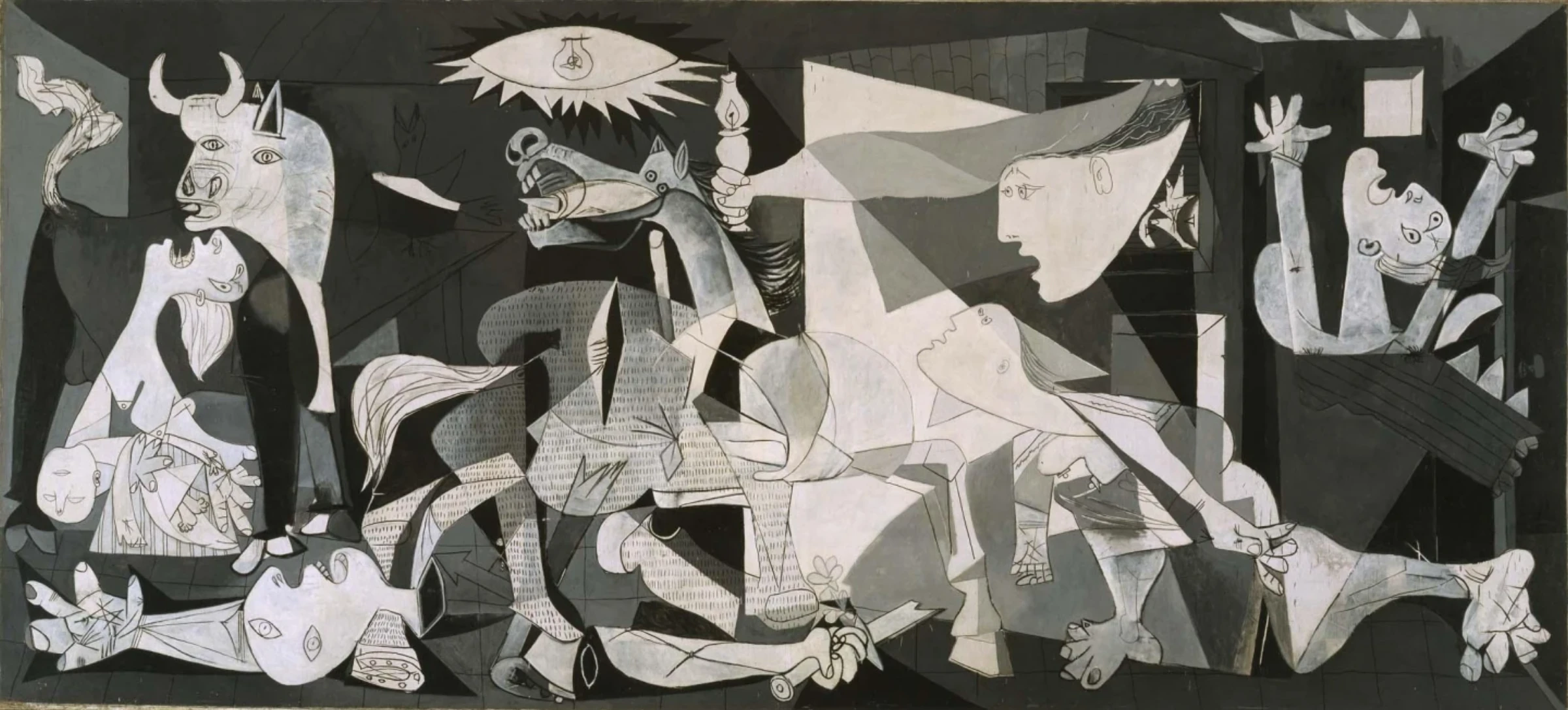
Spain’s Ministry of Culture has refused a formal request to loan Pablo Picasso’s Guernica from Madrid to Bilbao, closing, at least for now, a politically charged campaign to relocate one of the most symbolically loaded paintings in modern art. The work will remain at Museo Reina Sofía, where conservators say the canvas is too fragile for another major move.
The rejected request came from the Basque regional government, which wanted the painting shown at Guggenheim Bilbao between October 2026 and June 2027. The proposed display was framed as part of the 90th anniversary commemorations tied to the 1937 bombing of Gernika, the event that gave Picasso his subject. But the ministry, after requesting technical input from Reina Sofía, said the conservation risk outweighed ceremonial value.
What matters in this decision is not just curatorial preference but condition data. The latest conservation reporting describes active vulnerabilities in the paint layer, including cracking networks in darker passages and instability near upper edges. For an object of this scale, age, and structural history, transport stress is not abstract. Crating, vibration, climate transitions, and reinstallation all stack cumulative risk, even when best practices are followed. In plain terms, this was a preventive conservation ruling dressed as a political argument, and the distinction matters for future claims.
The Basque government’s position is understandable. The symbolic relationship between Gernika and Guernica has never disappeared, and requests to bring the painting to the Basque Country are not new. Still, precedent cuts both ways. If officials force movement against conservation advice here, every major institution in Europe inherits a new political template in which high-value works become negotiable under commemorative pressure. That would reshape loan governance far beyond Spain.
The longer history reinforces why the ministry took a hard line. Picasso’s painting spent decades outside Spain, including a long custodial period at The Museum of Modern Art in New York, before its 1981 return after democratic restoration. It was later transferred to Reina Sofía in 1992 and has since become institutionally anchored there. Every relocation in that arc had exceptional geopolitical conditions behind it. The current proposal did not.
For curators and lenders, this case is a live reminder that conservation language now functions as strategic policy language. Museums increasingly rely on condition-led refusal frameworks because they are defensible in court, intelligible to trustees, and less vulnerable to partisan reinterpretation than purely historical arguments. In that sense, Madrid’s decision is less an isolated refusal than a signal about how flagship works will be managed during a period of rising regional and national identity politics.
For collectors and foundations, the immediate takeaway is practical. If institutions continue tightening movement thresholds for landmark works, exhibition planning will shift from object mobility to contextual programming, commissioned responses, archival material, and high-quality interpretive surrogates. This is already visible in ambitious anniversary models that prioritize scholarship and public access design over blockbuster transport requests. The prestige economy of loans is not disappearing, but the friction is increasing.
Spain has not closed the broader commemorative conversation, but it has closed this specific transfer request. That outcome may disappoint stakeholders in Bilbao, yet it clarifies where authority currently sits: with conservation evidence, institutional stewardship, and the state’s duty-of-care argument for cultural patrimony. In an era of political volatility, that hierarchy is likely to become more common, not less.