Henry Moore Foundation Reopens Sheep Field Barn as Exhibition and Learning Hub
A £5m redevelopment at Henry Moore Studios & Gardens opens with new galleries and learning spaces, repositioning Perry Green as both a legacy site and active educational platform.
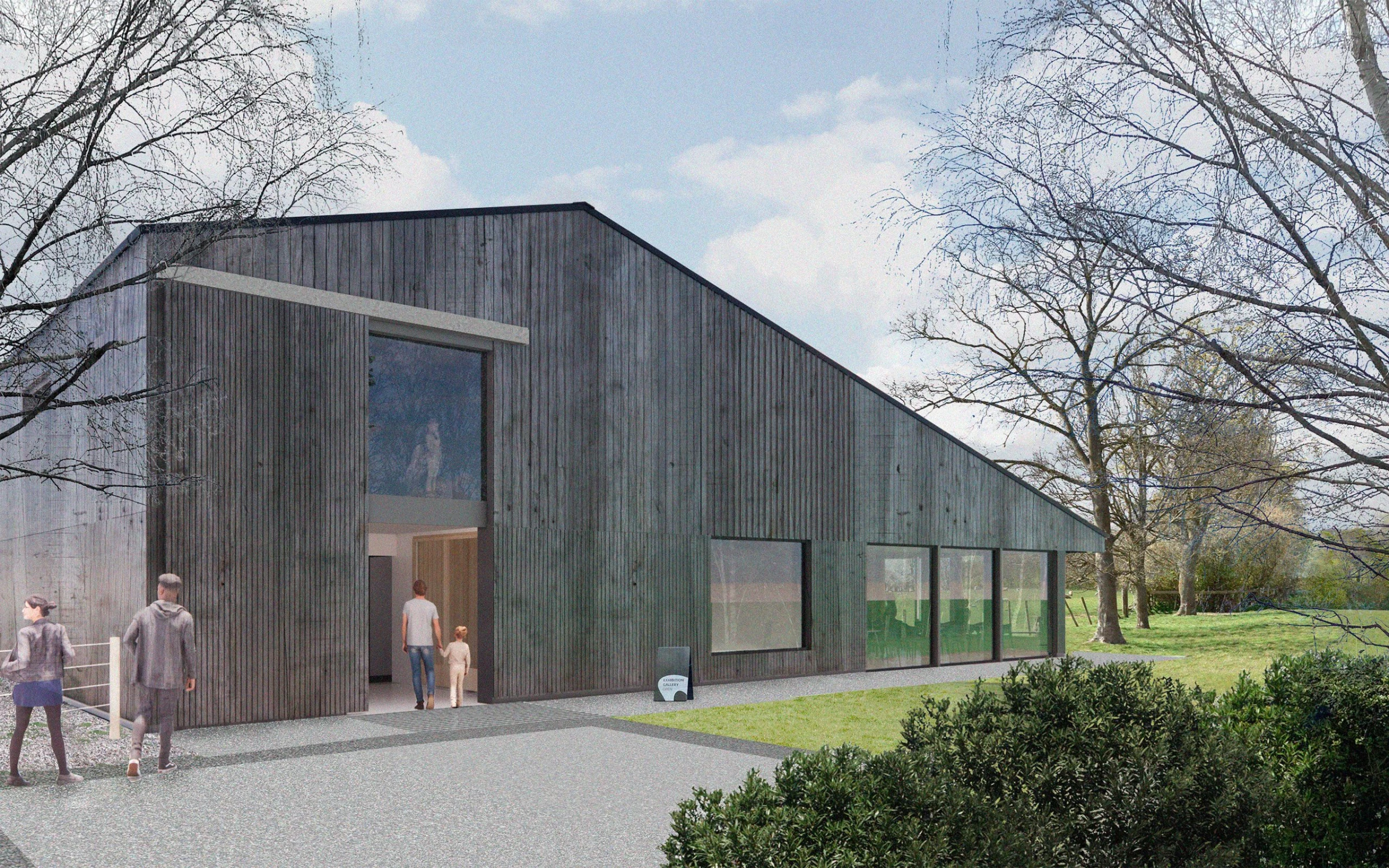
The Henry Moore Foundation has reopened the redeveloped Sheep Field Barn at Henry Moore Studios & Gardens in Perry Green, adding new exhibition capacity and purpose-built learning studios to one of Britain’s most important artist estates. The £5m project upgrades a former farm structure that had already been adapted in the late 1990s, and now positions the site as a dual platform for scholarship and public making rather than a static heritage destination.
That distinction is important. Artist-house institutions often drift toward reverential display, where legacy is preserved but not activated. The new Sheep Field Barn configuration appears designed to resist that pattern. Alongside a permanent narrative presentation on Moore’s life and practice, the programme opens with a focused exhibition on the Shelter Drawings, the wartime works that remain central to understanding how Moore translated mass vulnerability into formal invention. The pairing of biography and technical process is an editorial decision as much as a curatorial one.
Institutionally, the move comes at a moment when UK cultural organizations are under pressure to prove educational value with concrete infrastructure, not only mission language. The foundation’s expanded studios and dedicated engagement functions suggest a shift toward measurable learning output on site, where making, archival material, and landscape-scale sculpture can be taught together. For visitors, that means encountering Moore through method and context, not only through finished monuments in a park.
The Perry Green campus has long carried unusual weight in British sculpture history. The estate, its studios, and its fields hold a direct line between Moore’s studio logic and his monumental public commissions. By investing in the barn rather than building an external satellite, the foundation is betting that place-specific interpretation still has institutional value in a digital-first attention economy. The result should strengthen the role of Henry Moore Foundation as both archive steward and active producer of contemporary art education.
The reopening also sits inside a broader London-area Moore cycle this year, including the major outdoor presentation at Kew Gardens. That parallel visibility increases the stakes for interpretation at Perry Green itself. If the public encounters Moore in monumental form at Kew, the barn and studios must provide the deeper account of development, technique, and historical context that large outdoor displays cannot deliver on their own. The foundation appears to understand that division of labor.
Architecturally, the redesign by DSDHA continues a wider museum-sector trend in adaptive reuse, retaining agricultural and industrial envelopes while introducing contemporary gallery standards and educational flexibility. In policy terms, it is a low-friction way to add cultural capacity without the political and carbon costs attached to entirely new institutional builds. Comparable strategies are increasingly visible across UK heritage and university collections, where repurposed structures can carry both narrative and practical programming.
For curators and trustees, the project offers a useful case study in legacy governance. First, the foundation is using holdings and archives to build interpretive depth instead of relying on blockbuster loan cycles. Second, it is aligning capital spend with long-term engagement goals, rather than treating education as a secondary programme layered on after exhibition planning. Third, it is building continuity between historical scholarship and present-day public access, a balance many estate institutions struggle to sustain.
The reopening does not solve every pressure on monographic institutions. Audience renewal, regional transport access, and long-range conservation costs remain structural concerns. But this redevelopment addresses a core question with unusual clarity, whether an artist foundation can preserve authority while widening relevance. At Perry Green, the answer is being tested in physical space, with exhibition, archive, and teaching now sharing one upgraded platform.