Getty Center to Close for a Year in 2027 as $600m-$800m Modernization Reshapes the Campus
Getty will close its hilltop campus from March 2027 to spring 2028 to replace core infrastructure, rework galleries, and reposition itself for the 2028 Los Angeles Olympics.
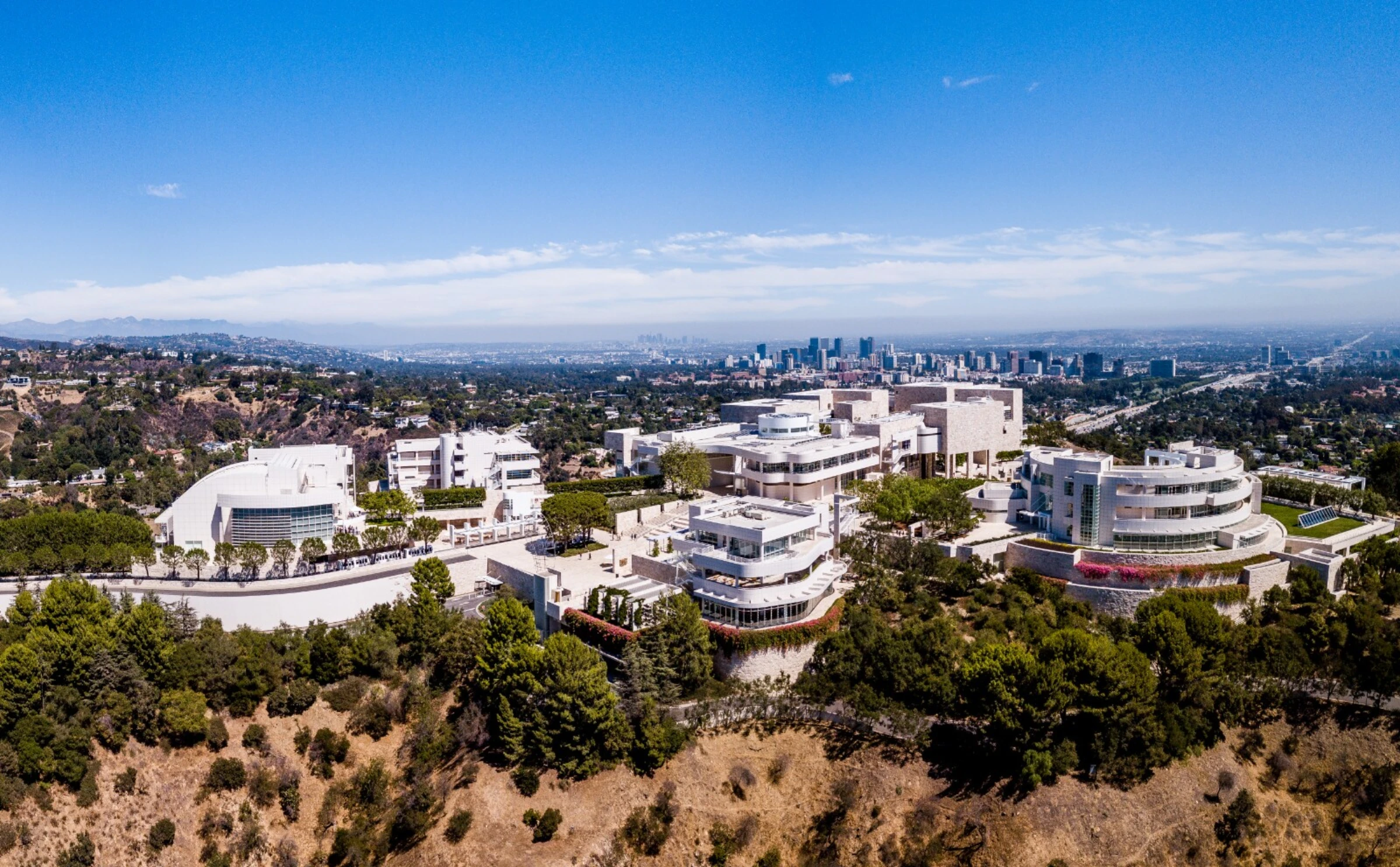
Getty Museum has announced that its flagship hilltop campus will close to the public from 15 March 2027 until spring 2028, marking the institution’s largest physical overhaul since the complex opened in 1997. The closure is not a cosmetic reset. It is a structural intervention that touches circulation, energy systems, gallery environments, and front-of-house logistics, all at a moment when Los Angeles museums are recalibrating for post-pandemic attendance patterns and rising operating costs.
The most visible piece is a full replacement of the tram system that connects the parking structure to the campus. Getty leadership has been explicit that the existing tram had become a reliability bottleneck. The new system is designed to increase throughput by roughly 400 visitors per hour, which matters not only for peak weekends but for major tourism periods tied to the 2028 Olympic and Paralympic Games. Getty is effectively using a forced infrastructure cycle to reset arrival conditions before the city’s next global visitor surge.
The institution is also reworking approximately 27,000 square feet of gallery space and continuing HVAC upgrades already in progress. For a museum with extensive holdings spanning painting, decorative arts, photography, and works on paper, climate consistency is not merely a facilities issue, it is a collections risk issue. Getty has framed these investments within its sustainability commitments and long-term stewardship obligations, a framing that aligns with broader sector pressure on institutions to reduce energy loads while maintaining strict conservation standards.
During the closure, Getty Villa will remain open and absorb additional programming, including a presentation of selected works usually seen at the Center. Getty also plans to activate a new program venue on Sepulveda Boulevard, creating a distributed model rather than a full-year institutional blackout. That matters politically and philanthropically. Long closures can weaken donor momentum and audience habit, so a multi-site strategy is designed to preserve public presence while construction proceeds.
Leadership is also betting that service-layer improvements, stronger connectivity, improved accessibility, redesigned departure and arrival zones, and upgraded visitor amenities such as retail and food service, will have measurable impact on repeat visitation after reopening. In museum economics, small friction points stack up. Time lost in queue, weak wayfinding, unstable mobile service, and dated amenities each reduce dwell time and return intent. Getty’s plan addresses all of them in one capital cycle.
The renovation budget, reported in a range of $600m to $800m, also signals where top-tier US institutions now sit in capital expenditure terms: replacement-level projects are approaching civic-infrastructure scale. For boards, this raises a hard governance question. If major interventions are inevitable every few decades, institutions need long-horizon maintenance reserves that are treated as mission critical, not discretionary.
Getty’s approach is therefore notable for two reasons. First, it links infrastructure replacement to institutional strategy rather than treating it as a back-office repair. Second, it recognizes that closure risk can be managed through distributed programming and a clear reopening horizon. Whether this becomes a template for other large campuses will depend on execution quality in 2027 and 2028, especially if visitor demand in Los Angeles accelerates as expected.
For now, the key fact is simple: one of the world’s most visited art campuses is going dark for a year to rebuild its operating spine, and the outcome will shape how ambitious museum-scale modernization projects are judged in the decade ahead.