Crystal Bridges Bets Big on Expansion and American Scale
Crystal Bridges is adding 114,000 square feet and testing whether the museum-expansion boom can still claim civic purpose instead of pure prestige
Crystal Bridges Moves From Young Institution to Permanent Power
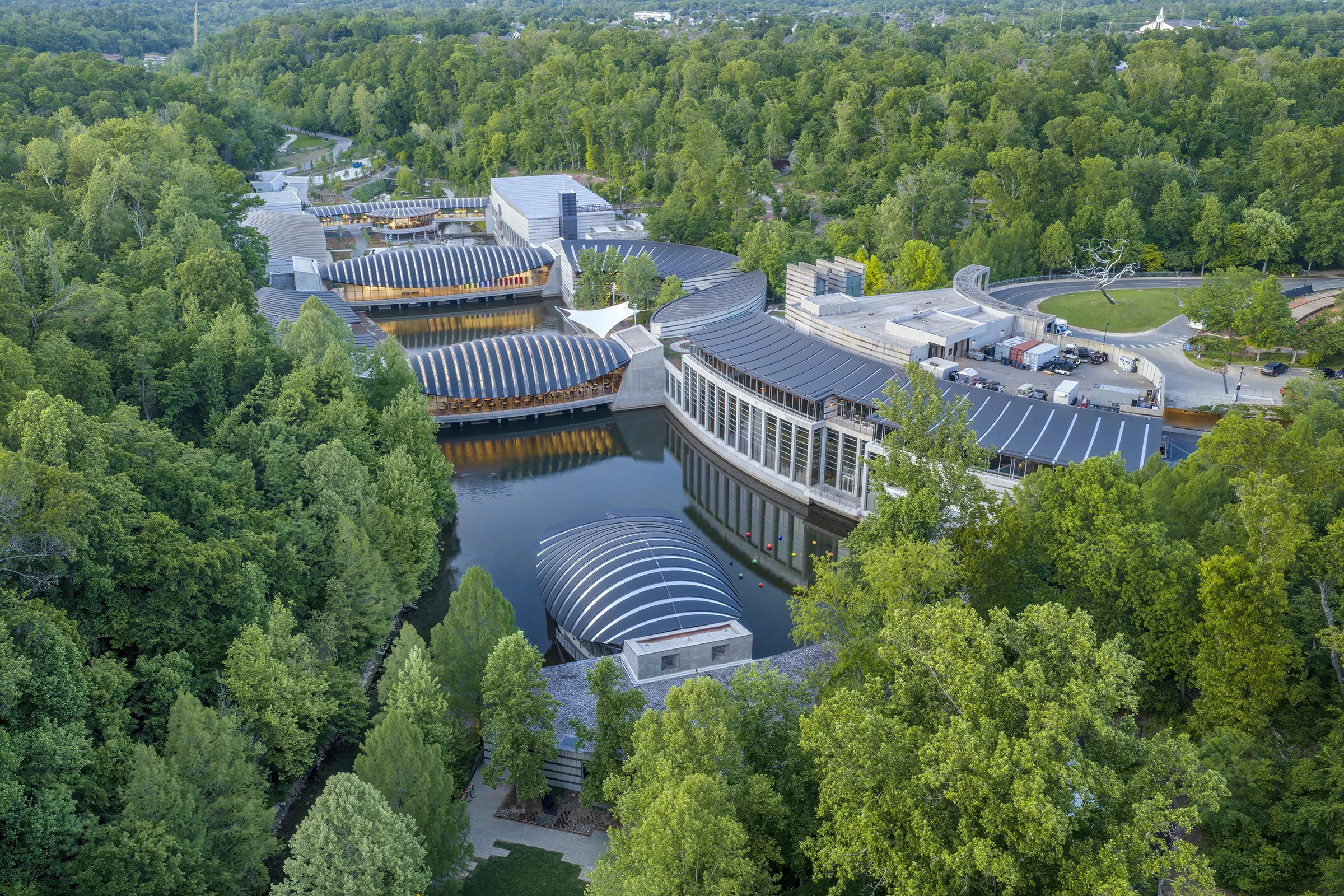
Crystal Bridges opened only fifteen years ago, but its new 114,000-square-foot addition announces a different timeline. This is no longer a startup museum proving Bentonville deserves national attention. It is a mature institution trying to lock in its place as a long-horizon center of American art, philanthropy and regional cultural power. ARTnews reported that founder Alice Walton presented the expansion as part of a fifty-year plan developed with Moshe Safdie. That framing matters. Museum additions are usually sold as responses to attendance pressure, collection growth or programming need. Crystal Bridges is presenting its expansion as succession planning in architectural form.
The numbers are meant to impress. The addition increases the campus by more than half, adding galleries, gathering areas, educational space and a bridge connection that folds the new construction into the existing site rather than treating it as a detached annex. But the real issue is not size. It is what size is being asked to do. In the American museum sector, expansion has become a language of confidence even when confidence is scarce. Boards expand when labor is strained, audiences are fragmented and donor expectations have become more managerial. A large building project says: we still believe physical institutions can command attention and shape public memory.
Crystal Bridges has a better case than most because it has never pretended to be an ordinary museum. From the beginning it was a Walton-backed intervention into the geography of American art, pulling major works and national press toward northwest Arkansas. Its free general admission and substantial campus turned access into part of the brand. The expansion therefore extends a specific wager: that scale in the middle of the country can still feel like service rather than extraction, and that a museum built outside the coastal capitals can speak for American art without sounding provincial.
Moshe Safdie and Alice Walton Keep the Founding Logic Intact
Architecture is central to that wager. On the museum’s own Safdie profile page, Crystal Bridges continues to define the campus through the architect’s relationship to landscape, social context and human aspiration. That language can read soft, but at Crystal Bridges it has had concrete consequences. The original pavilions did not simply house art; they turned arrival, water, bridges and the Ozark terrain into part of the institutional script. Keeping Safdie on the expansion preserves the founding mythology. Walton is not only adding square footage. She is trying to prevent stylistic drift and protect the museum from the usual visual incoherence that sets in when multiple capital campaigns pile up over decades.
That insistence on continuity is revealing. Many museum expansions announce a new chapter by importing a different architect and a different aesthetic vocabulary. Crystal Bridges is doing the opposite. It is arguing that continuity itself is the premium product. In practice, that means the addition will likely be judged less on formal novelty than on whether it can make the campus feel inevitable, as if it should always have existed at this scale. That is a harder test than simply delivering another spectacular wing.
The museum also has a collection story that supports the buildout. Crystal Bridges has steadily enlarged its holdings while extending its cultural footprint through acquisitions, special exhibitions and the broader campus program. A larger envelope gives the institution more room to stage the history of American art as it wants that history understood: nationally ambitious, regionally grounded and backed by private wealth that prefers the language of access to the language of exclusivity. That combination can be productive, but it is never neutral. Free admission does not erase the politics of who gets to narrate the nation through buildings and collections.
The expansion therefore lands in a field already thick with arguments about governance, nationhood and symbolic capital. Readers who have followed artworld.today’s coverage of the New Museum’s expansion politics will recognize the pattern. New square footage is rarely just a facilities story. It is a claim about institutional permanence, donor confidence and the public one imagines oneself serving.
Why This Expansion Arrives at a Strategic Moment
Timing matters as much as design. The museum sector is no longer in a carefree expansion cycle. Inflation has made construction more punishing, philanthropic money is more contested and the rhetoric of civic benefit now faces sharper scrutiny from workers, local communities and critics. For Crystal Bridges to go big under these conditions suggests both financial insulation and strategic urgency. The institution knows that a museum can age quickly if it lets the field around it redefine what ambition looks like. Expanding now keeps Crystal Bridges inside the national conversation instead of allowing it to become a successful but settled regional monument.
There is also a succession question hiding inside the optimism. Walton and Safdie are both deeply identified with the museum’s origin story. A major addition completed under their watch lets them author the next institutional chapter before others inherit the task. That is not vanity. It is governance. Museums often discover too late that leadership transition is easier when the physical and symbolic logic of the place has been stabilized in advance.
Still, big architecture creates its own obligations. More galleries mean more programming pressure, more staffing needs and a larger demand for exhibitions that justify the footprint. If the museum fills the new spaces with respectable but low-risk Americana, the addition will look expensive rather than necessary. If it uses the expansion to sharpen its account of American art, including the frictions of class, race, extraction, environment and regional mythmaking, then the project could feel more than monumental.
What Crystal Bridges Has to Prove After the Ribbon Cutting
The best-case version of this project is not that Bentonville gets a bigger landmark. It is that Crystal Bridges proves a museum expansion can still produce civic seriousness instead of pure donor theater. That means educational space has to matter, public circulation has to feel genuinely public and the collection strategy has to stay intellectually alive. A larger building is only persuasive when it creates a larger field of thought.
There is a regional politics to this story that national coverage can miss. Crystal Bridges is not merely expanding a museum; it is consolidating a cultural corridor in a part of the country where corporate wealth, philanthropic ambition and population growth have begun to reinforce one another. Bentonville has been remade in the shadow of Walmart’s scale, and the museum has become one of the most visible ways that private fortune translates itself into public prestige. That translation is not inherently suspect, but it should be read clearly. Museums backed by concentrated wealth often promise democratic access while quietly expanding the soft power of the patrons who created them. The question is whether audiences receive only a beautiful campus or also a sharper institution willing to examine the conditions that made that campus possible.
That is where collection policy will matter. Crystal Bridges has the opportunity to use new space for a more contested and less consoling account of American art, one that includes Indigenous dispossession, labor struggle, ecological transformation and the visual culture of commerce alongside the canonical triumphs museums usually present. If the addition becomes a place where the nation can be pictured only as aspiration, it will undersell the seriousness that its scale claims. If it becomes a place where American art is shown as a field of conflict, reinvention and unequal access, the expansion could justify itself as more than a donor monument.
There is also a practical museum-world point here. Expansions often produce a short-lived critical consensus because everyone can agree that more room seems useful. The harder argument begins when scheduling, conservation and scholarship must catch up with the architectural claim. Collections have to move, labels have to be rewritten, new publics have to be courted and old habits have to be broken. A campus can look seamless while the institution behind it remains administratively fragmented. Crystal Bridges will have to prove that its organizational capacity is as ambitious as its building plan.
There is already a useful framework for reading that challenge in our earlier guide on museum expansions as programming signals. Architecture can attract attention, but programming determines whether expansion becomes infrastructure or just image management. Crystal Bridges now has the chance to test that distinction at a very high level.
There is a final reputational stake as well. Crystal Bridges has spent years turning itself from a curiosity into a reference point in national museum talk. This addition tries to end the qualifying language for good. No more surprise that something serious exists in Bentonville. No more framing the institution as promising for its age. Expansion is how the museum insists it should now be judged against the country’s largest players on equal terms, with all the scrutiny that implies about governance, scholarship and public accountability.
For now, the expansion looks less like an indulgence than a declaration that the museum intends to remain a defining player in how American art is shown, taught and geographically distributed. That does not make the wager automatically admirable. It makes it legible. Crystal Bridges is using architecture to say it plans to outlast the current cycle of doubt around public institutions. The serious question is whether the museum can make that confidence feel earned once the applause for the new building fades.